
For nearly a century, FFA has helped young people develop leadership, personal growth, and career success through agricultural education. That mission has shaped generations of students, families, teachers, and alumni. But today, many former officers, members, and supporters are raising serious concerns that National FFA has drifted from that mission and is now suppressing faith-based expression in the name of “inclusion.”
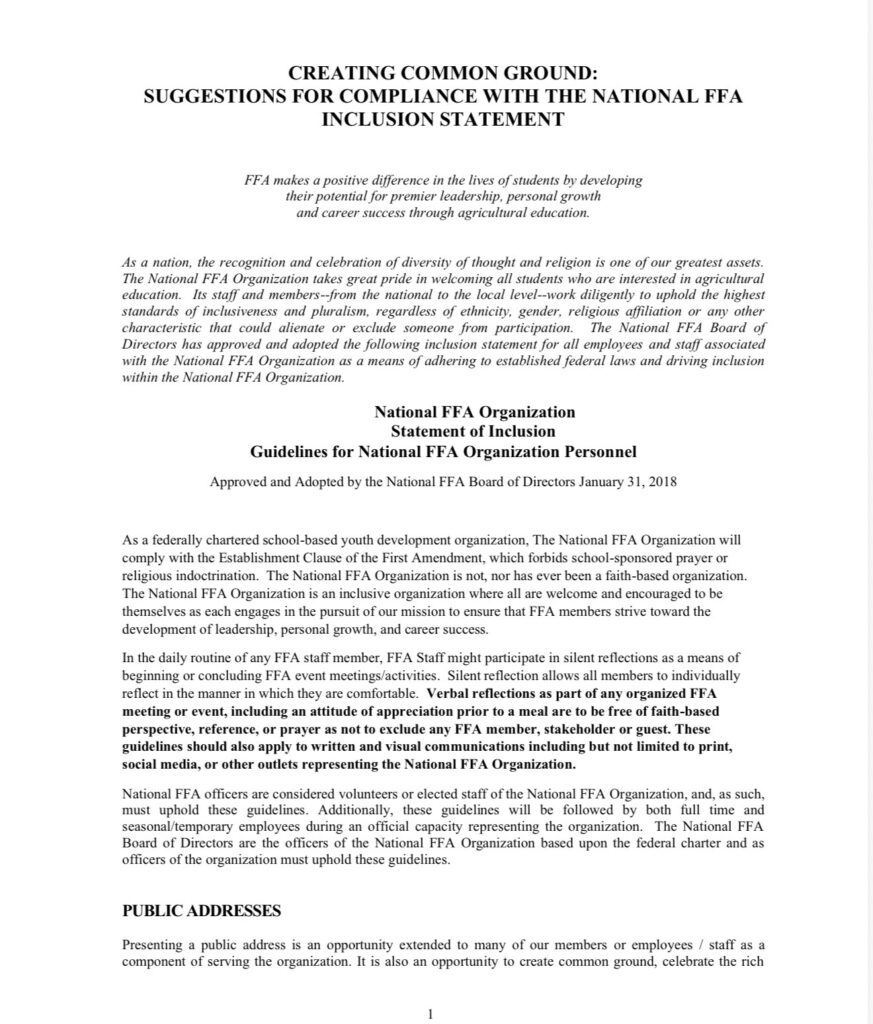
The concern is not hypothetical. National FFA’s January 31, 2018 Statement of Inclusion states that verbal, written, and visual communications must be “free of faith-based perspective, reference, or prayer…” According to the Statement, national officers, as volunteers or elected staff, are required to comply.
The document goes further. Under its guidance for “inclusive messages,” it instructs speakers not to single out a religious book or writing as the only acceptable one, and not to use specific references to religious leaders or literature, including Jesus and other explicitly religious language. For many parents, alumni, and former members, that does not look like neutrality. It looks like faith and more often than not Christianity being treated as a problem to be managed out of public view.
At the same time, over 100 former state and national officers from multiple states have raised concerns that National FFA has embraced a top-down diversity, equity, and inclusion agenda while reprimanding or discouraging expressions of faith. In a February 19, 2026 letter to National FFA leadership, former officers and members said the organization has strayed from its core mission and specifically cited the suppression of officers’ religious freedom among their concerns. The letter also references national officers being reprimanded for expressions of faith during their term of service.
Disturbing Examples
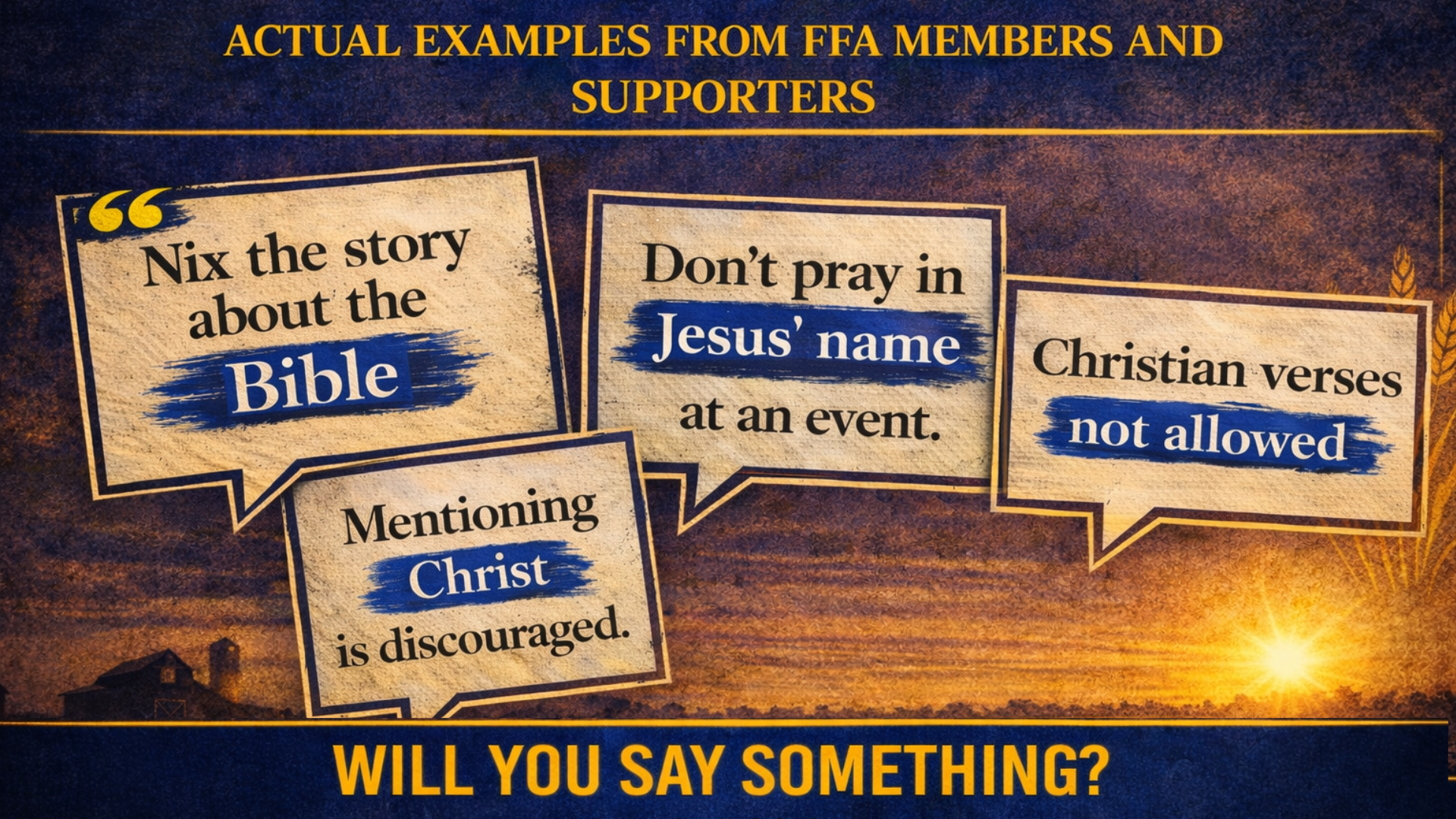
Reported examples shared online and off paint an even more troubling picture. Those accounts include statements such as “nix the story about the Bible,” warnings against praying in Jesus’ name at an event, discouragement of mentioning Christ, and reports that Christian and inspirational verses were not allowed in some settings. These accounts deserve scrutiny, documentation, and public discussion.
The larger issue is straightforward: if “inclusion” means religious expression must be stripped out of speeches, reflections, writing, artwork, and public participation, then that is not true inclusion. If faith is singled out for exclusion while ideological conformity is expected elsewhere, then something has gone badly wrong.
This matters, not just because of the possible violation of these members rights to freedom of religion and expression, but because FFA is supposed to train leaders in agriculture, not teach students that traditional faith convictions must be hidden to participate fully. Members should not have to choose between leadership and conscience. Families should not have to wonder whether the organization they once trusted now treats basic religious expression as disqualifying or unwelcome.
Members, parents, teachers, alumni, and supporters deserve the truth. They deserve transparency about the policies being enforced, the expectations being placed on volunteers and officers, and the real-world consequences for those who speak openly about their faith.