
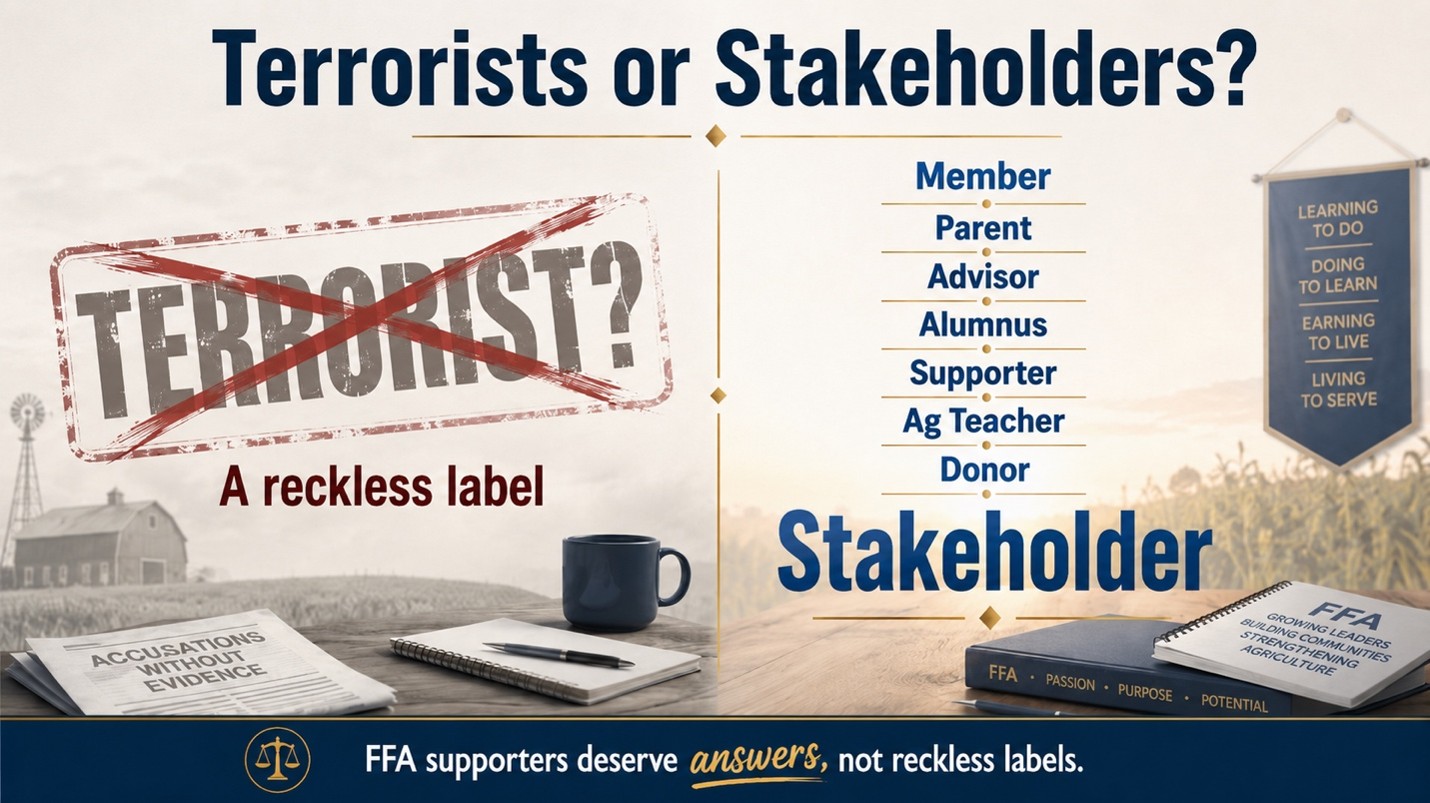
Terrorists or Stakeholders? In the last National FFA Board of Directors meeting, a senior National FFA leader reportedly referred to critics of National FFA governance, leadership, and DEI-related initiatives as “online” or “internet terrorists.” Another board member dismissed questions from “cyber bullies.”
That is not a small thing.
The word “terrorist” is not a casual insult. It is a serious label associated with violence, coercion, and public danger. National FFA leaders should NOT apply it to parents, alumni, advisors, members, donors, or supporters who are raising concerns about the direction of an organization they care about.
If this report is accurate, National FFA leadership owes its members and supporters a clear explanation.
Criticism Is Not Terrorism
People asking questions about governance are not terrorists.
Stakeholders raising concerns about transparency are not terrorists.
People questioning leadership decisions are not terrorists.
People objecting to DEI-related initiatives are not terrorists.
They are stakeholders.
They are the grassroots community that built, funded, served, taught, promoted, and defended FFA for generations.
FFA Should Model Better Leadership
FFA teaches students to lead with character. It teaches public speaking, service, responsibility, and respect.
Those standards should apply at the top.
National leaders should be able to answer criticism without trying to smear the people asking questions. When leaders use extreme labels against critics, it does not build trust. It raises more questions.
Does National FFA leadership want to hear from members, advisors, alumni, parents, and supporters?
Or does it view criticism as something to silence?
The Board Serves the Organization
National FFA identifies Dr. Travis Park as National FFA Advisor and Board Chair. National FFA also states that the organization is led by the direction and policy set by the National FFA Board of Directors.
That role carries responsibility.
It requires more than defending leadership decisions. It requires listening to the people who make FFA possible: students, advisors, families, alumni, donors, state associations, agriculture teachers, and local communities.
Those people deserve respect.
They deserve answers.
They do not deserve to be branded as threats for speaking up.
What National FFA Should Do Now
National FFA should clarify whether this statement was made.
It should release the full context.
It should make clear that peaceful criticism, public questions, online advocacy, and grassroots concern are not terrorism.
And it should address the underlying issues: governance, transparency, leadership accountability, and the future direction of FFA.
Keep Asking Questions
Supporters should not respond with personal attacks. That only distracts from the issue.
Stay factual. Remain focused. Stay firm.
Find out where your state association where it stands.
Ask National FFA whether it believes concerned members, advisors, alumni, parents, and supporters should be treated as threats.
Judge whether leadership is willing to answer the questions being raised.
FFA does not need name-calling.
FFA needs accountability.
Members, advisors, alumni, parents, and supporters deserve answers.