

In 2022, Dr. James R. Woodard abruptly resigned as National FFA Advisor and National FFA Board Chair. In his resignation letter, he didn’t mince words. He expressed frustration that the National FFA Organization had allowed its focus on diversity, equity, and inclusion (DEI) to drift into something divisive and exclusionary.
“Highlighting any one group immediately creates division and marginalizes others in the process. Are all our students not worthy of celebration?” — James R. Woodard
This wasn’t a case of quiet retirement. Woodard, by all accounts a respected leader and lifelong ag educator, walked away from one of the most prestigious roles in youth leadership—because he saw the organization losing sight of its mission.
A Pattern of Alienation
Woodard isn’t the only one raising the alarm. From board resignations to grassroots teacher frustration, a growing number of voices in the ag education community are questioning whether FFA’s DEI policies are actually inclusive—or if they’re creating a new kind of exclusion.
Teachers whisper about walking on eggshells. Longtime supporters quietly pull back. Some are outright leaving. But few dare speak publicly for fear of being labeled or attacked.
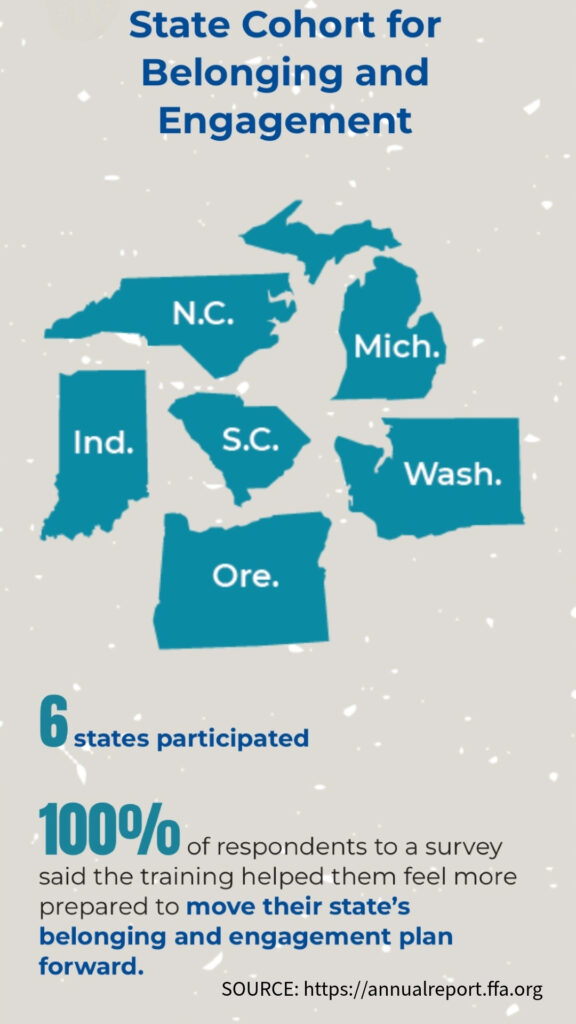
FFA has doubled down on “identity-based” initiatives in recent years—celebrating certain demographic groups with national campaigns, restructuring programs around DEI benchmarks, and introducing training many see as political rather than agricultural. The goal may have been to expand access, but the result, in many places, has been disunity and resentment. According to the FFA’s own Annual Report, the organization is pushing 100% participation for national DEI training programs aimed directly at the states and local chapters.
What gets lost in the noise? The basics: teaching agriculture, mentoring youth, and building the next generation of rural leaders.
When Inclusion Becomes Ideology
Nobody opposes the idea that every student should feel welcome. But there’s a difference between treating everyone fairly and centering the organization around identity politics. The irony is not lost that National FFA’s nearly singular focus on DEI and actualizing their statement of belonging is being used as a radical departure from the core agricultiral mission of the organization

FFA’s own mission is clear: To make a positive difference in the lives of students by developing their potential for premier leadership, personal growth, and career success through agricultural education.
Where does DEI activism fit in that sentence?
We’re now in a place where rural, faith-driven, traditional students and teachers—many of whom built this organization—feel they no longer belong. Celebrating every member should mean focusing on each student’s individual merit and contribution. Instead, the push for identity-based programming often feels like FFA is drawing lines between who counts and who doesn’t.
The Cost: Quiet Exits, Missed Potential
Woodard warned that his resignation might give others permission to leave too. That appears to be happening. Respected educators are retiring early, pulling back from national leadership, or simply choosing not to renew involvement.
Students, too, are watching. Many now feel like they have to fit a political mold to be fully embraced by their own organization. The result? Quiet disengagement from youth who should be the future of agriculture.
“Celebrate EVERY student, not just certain groups.” — Woodard
A Call to Refocus
FFA must decide: is it a political project or an agricultural one?
If the organization wants to retain the support of the teachers, alumni, and families that have sustained it for generations, it must reject the divisive DEI model currently in fashion and return to common-ground leadership.
Yes, embrace every student. But do it by emphasizing shared values—hard work, leadership, integrity, agriculture—not group identity. The creed, the jacket, the motto—these unify. The current ideological drift does not.
FFA should take Woodard’s resignation seriously. Not just as a personal decision, but as a symbol of something bigger: the quiet departure of good people from an organization they no longer recognize.
Let’s fix that before it’s too late.