
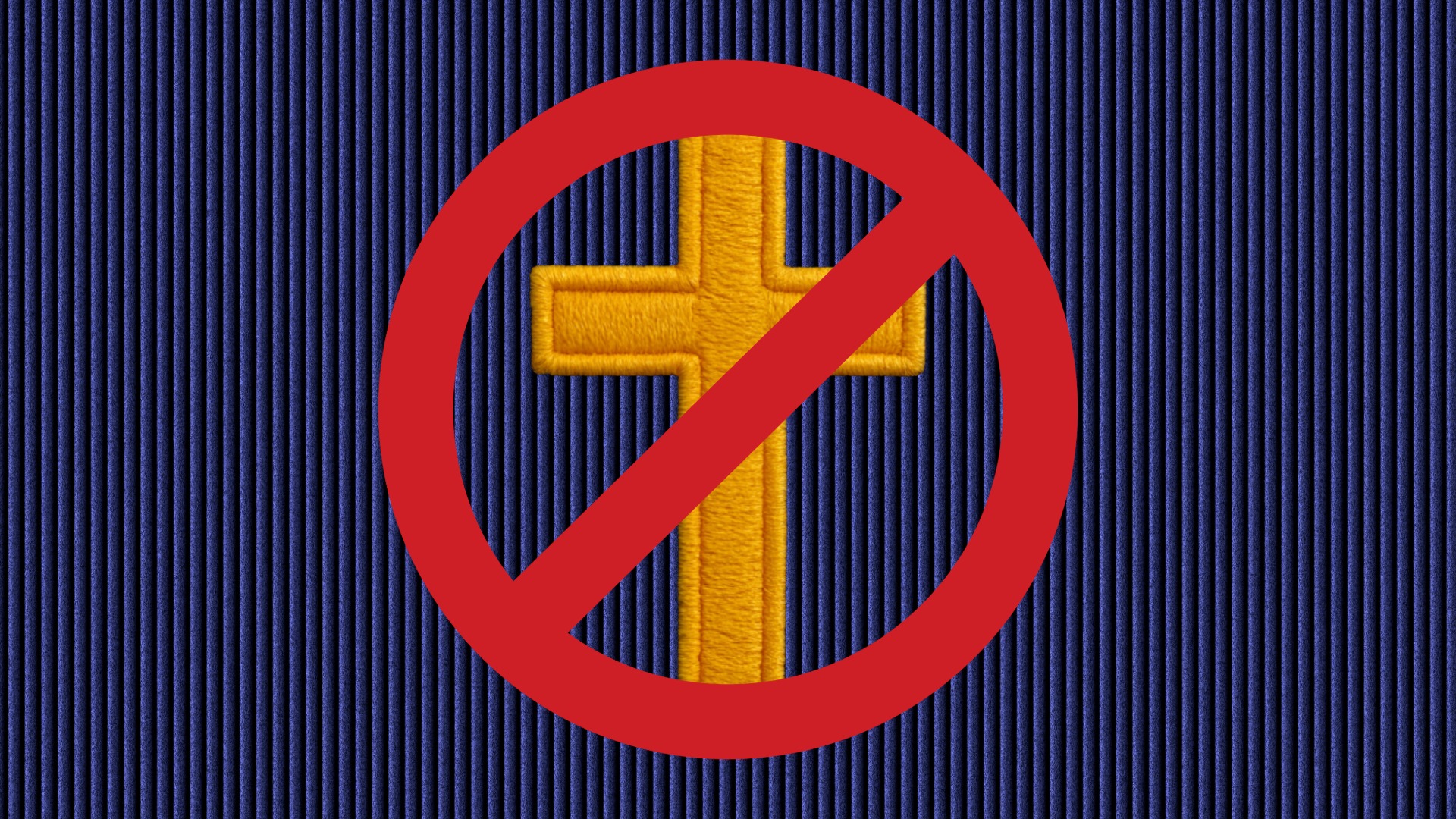
Once upon a time, the blue corduroy jacket stood for more than leadership and agriculture—it stood for community, character, and faith.
FFA banquets began with prayer. Chapter officers included chaplains stationed by the Bible. “FFA Sunday” sent members in their official dress to sit together in pews, shoulder to shoulder, affirming shared values rooted in faith and rural tradition.
But in the last 20 years, something has changed—not with a bang, but with a slow, quiet erasure.
There’s no policy banning Christianity from FFA. But talk to enough students, parents, or advisors, and a pattern emerges: the message is clear—keep your faith to yourself.
So the question demands to be asked:
Is the National FFA actually hostile to Christianity?
Faith Removed by Degrees
Over the past two decades, FFA has systematically distanced itself from public expressions of Christian faith. The evidence isn’t in official memos—it’s in what’s gone missing:
- The chaplain role is now “optional,” its biblical roots stripped or deleted from many chapter rosters.
- Prayers at banquets and meetings have been replaced by “moments of silence” or generic reflections—if included at all.
- FFA Sunday has vanished from official National FFA Week resources.
- National officer candidate training materials offer zero guidance on legally accommodating student-led prayer or religious identity. The safer option? Avoid it altogether.
- Faith-oriented officer candidates—particularly Christian students—are often advised to downplay their beliefs, lest they come across as “divisive” or “unprofessional.”
A former national officer confided that students with strong faith convictions often sense they are unwelcome in national leadership—an exclusion that isn’t written down, but is deeply felt.
A State Example: When Inclusion Stops at the Cross
National FFA’s unease with faith is no longer confined to the national level. It’s showing up in states across the country.
In one state, an FFA member was discouraged from including a cross as part of his presentation. Paid staff even suggested he remove references to his Christian faith from his speech. No disciplinary action was taken—because no rule was broken. But the message rang loud and clear: Faith is fine, so long as it stays hidden.
Policy vs. Practice: A Double Standard Emerges
In 2017, the National FFA Board updated the Official FFA Dress policy to allow students to wear visible religious head coverings—like hijabs, turbans, or kippahs—so long as they don’t distract from the uniform.
That change was framed as a win for inclusivity. But what about spoken expressions of faith?
A headscarf is protected. A cross on stage? Controversial.
Diversity, Equity, and Inclusion (DEI) is celebrated in word and deed—unless that identity is rooted in Scripture. The National FFA Statement of Inclusion explicitly warns against prayer or faith-based language in speeches, even advising that invocations be “nonsectarian,” free of references to “God Almighty, the Holy Spirit, Jehovah, Allah” and so on .
Translation? A moment of silence is encouraged. A spoken prayer in Jesus’ name is not.
That’s not inclusion. That’s selective tolerance.
The Trump Moment: When Faith Took the Stage
Contrast that secular drift with one of the boldest displays of faith in modern FFA history: President Donald J. Trump’s 2018 speech at the National FFA Convention.
In response to a synagogue shooting, Trump paused his remarks and invited a Jewish rabbi and a Christian pastor to the stage. Pastor Thom O’Leary prayed openly in the name of Jesus before thousands of FFA members. Rabbi Benjamin Sendrow prayed openly for moral clarity, citing Old Testament Scripture.
For both prayers, the crowd responded: “Amen.”
No lawsuits. Zero backlash. No confusion. Just reverence.
It wasn’t about politics. It was a reminder that faith still lives in the heartland—and in the hearts of students wearing blue jackets.
So why is the organization itself so hesitant to embrace that same spirit?
Creating Common Ground—Or Avoiding Conviction?
To be fair, the “Creating Common Ground: Suggestions for Compliance With The National FFA Inclusion Statement” document is rooted in legal caution. The document claims that, as a federally chartered school-based organization, FFA is subject to the Establishment Clause even though it is not a US government agency or entity. The document’s intent is to avoid religious coercion but instead it has stripped the organization’s foundation in faith from FFA culture altogether. The same faith that finds its origins in American Agriculture.
But in practice, this document has become a manual for avoidance. It discourages staff from using religious language, symbols, or scripture—even when initiated by students themselves. It chills the ability of members to speak from the heart, especially when that heart is guided by faith.
Christian students aren’t asking to dominate the microphone. They’re asking for the same freedom to express their identity as any other student. They’re not trying to convert—they’re trying to belong.
Time to Rethink What Inclusion Really Means
National FFA has not banned Christianity on paper. But it has cultivated a culture where Christianity feels unwelcome in practice.
And if faith must be hidden to be accepted, then we’ve lost more than tradition—we’ve lost courage.
The rural students who raise animals, grow crops, and serve their towns are not just chasing accolades. They’re chasing purpose. Their faith is not ornamental. It’s foundational.
If National FFA truly believes in inclusion, it must live up to that belief—not by silencing Christian students, but by standing alongside them.
If it’s safe to say “Let there be peace on Earth,” it should be just as safe to say:
“God bless the American farmer.”
Anything less is inclusion without honesty—and diversity without depth.