
For many years, the Fellowship of Christian Farmers International (FCFI) was a familiar presence at the Texas FFA Convention. The organization offered students voluntary opportunities for Christian fellowship, agricultural service, and mission involvement. In 2026, that changed when FCFI and other Christian organizations were excluded from exhibit space for the first time.
According to correspondence between the two organizations, the decision resulted from a revised exhibitor agreement implemented by Texas FFA Executive Director and National FFA Board Member Jennifer Jackson. The new policy – arbitrarily adopted after this year’s exhibitor registration had already begun – prohibited certain organizations from exhibiting and concluded that participation by the FCFI, American Fellowship of Cowboy Churches, and perhaps others were affected by the change. Based on publicly available information, no Texas FFA Board of Directors vote or publicly documented board action has been identified approving this policy change or FCFI’s exclusion.
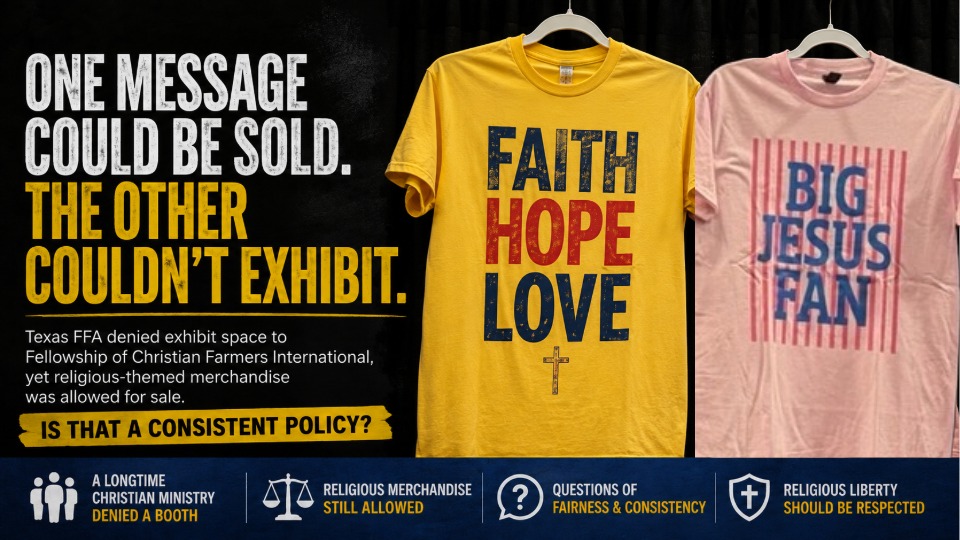
Texas FFA’s position raises questions about consistency. While FCFI was denied an exhibit because its Christian ministry was determined not to align with the organization’s exhibitor policy, vendors at the convention continued to sell apparel and merchandise featuring Christian or Jesus-related messages. If religious-themed merchandise could be offered for sale inside the exhibit hall, why was a Christian agricultural ministry prohibited from maintaining a voluntary informational booth? The apparent distinction between selling a religious message and allowing students to voluntarily engage with a faith-based organization deserves a clear explanation.
Texas FFA’s decision unfortunately follows National FFA’s policy limiting religious expression at the national level despite National FFA Board Chair and National Advisor Dr. Travis Park recently clarification that National FFA’s religious-expression policies “do not dictate policies or practices of State Associations and local FFA chapters concerning religious expression.” FCFI has similarly been denied space at the National FFA Convention despite being welcomed at prior national conventions and over 35 state FFA conventions around the country.
In other words, Texas FFA’s decision marks yet another example of how National FFA’s DEI policies have provided a basis for religious suppression at the state and local level.
Oddly, Texas FFA adopted this more restrictive exhibitor policy while both the federal government and state lawmakers have placed renewed emphasis on protecting religious liberty and safeguarding religious expression, including in public education. Across the country, policymakers are reaffirming that individuals should not be excluded from public life because of their faith.
Whether you agree or disagree with FCFI’s ministry, the larger question is one of governance, transparency, and religious liberty:
Should a longstanding exhibitor and Christian agricultural organization be excluded from the Texas FFA Convention?
If you believe Texas FFA should respect religious liberty, apply its policies consistently, and make significant policy decisions through transparent board governance, please like, share, and join the conversation.